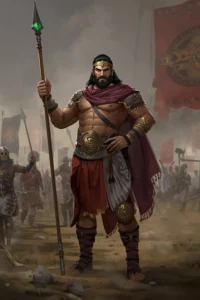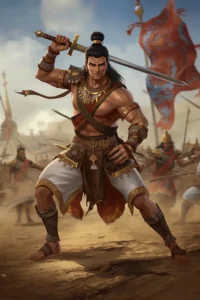
Balarama, elder brother of Krishna, is a central figure in the Mahābhārata and the Yadava lineage. Known for his immense strength, mastery of the plough-weapon (halayudha), and calm yet formidable presence, Balarama was a teacher to many warriors, including Duryodhana, Bhima, and others. Unlike Krishna, Balarama remained neutral during the Kurukshetra War, refusing to fight on either side, as he believed in maintaining dharmic balance. His neutrality, however, did not diminish his authority or wisdom; he guided and counseled family members and allies with insight and patience. Balarama’s life reflects the combination of ascetic discipline and martial prowess, symbolizing power tempered by restraint. He was also a mentor, ensuring that martial knowledge was passed to the next generation. Later, Balarama’s legacy continued through his disciples and the Yadava clan, though he too witnessed the tragic downfall of his family during the Mausala Parva. Revered as a deity and an embodiment of strength, Balarama represents dharmic restraint, loyalty to family, and the ideal of using power wisely rather than recklessly.